Architecture Photography Tips For Beginners
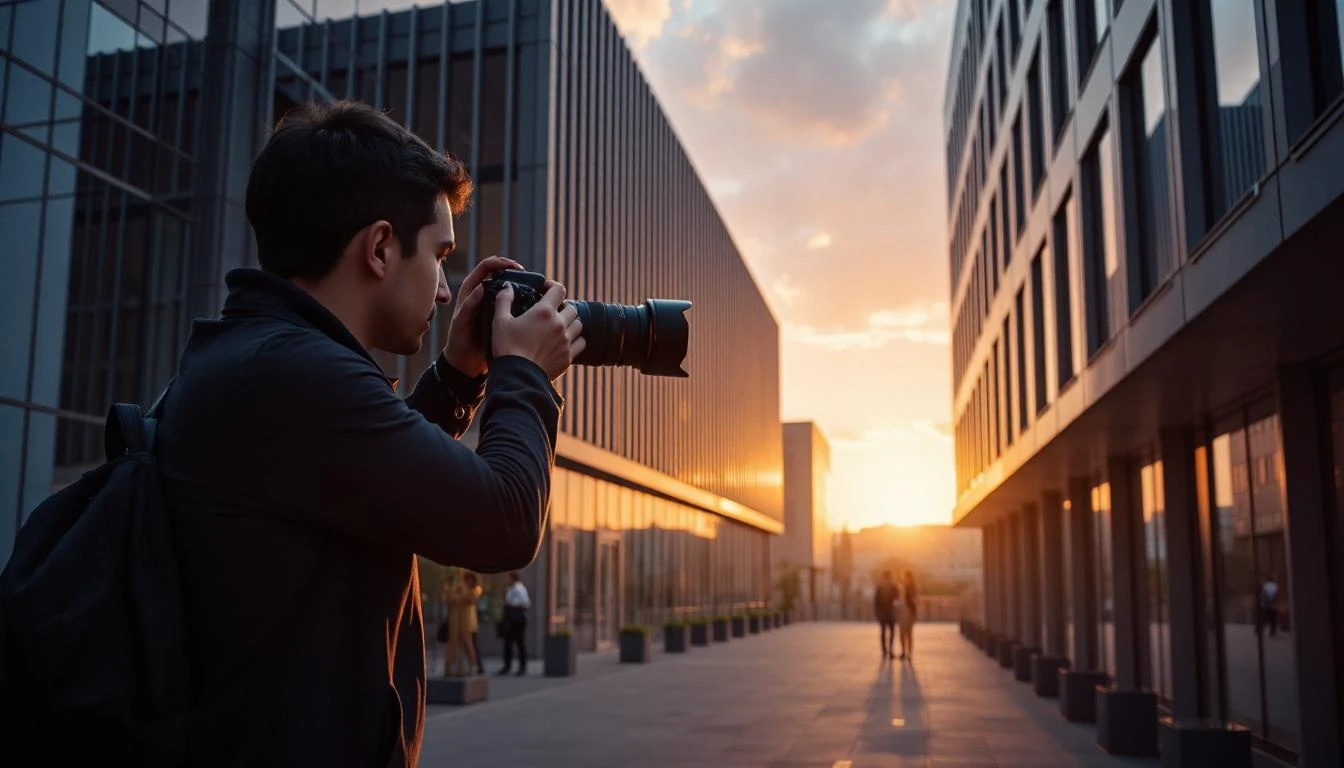
Urban spaces often speak louder than words. Every building, curve, and shadow carries a visual rhythm waiting to be interpreted through a careful eye. When you start paying attention to how structures interact with light and environment, photography becomes less about equipment and more about perception. You begin to notice how cities quietly compose themselves like living artworks.
In that process, mastering architectural photo techniques becomes a gateway to seeing beyond surface-level aesthetics. It teaches you how geometry, balance, and storytelling merge inside a single frame, turning ordinary buildings into powerful visual statements that feel intentional and emotionally engaging.
Understanding The Basics Of Architecture Photography
Architecture photography is not just documentationit is interpretation. At its core, it requires awareness of spatial relationships and visual balance.
The foundation of photography composition architecture lies in understanding how elements within a frame communicate with each other. Lines, shapes, and negative space work together to guide the viewer’s eye, creating structure and meaning within the image. This is where beginners often shift from random shots to intentional storytelling.
The early stage of learning architectural photography is about slowing down. Instead of rushing, you observe how buildings breathe within their surroundings, how light interacts with surfaces, and how perspective changes everything.
As photographer Julius Shulman once said, “Architecture is the thoughtful making of space.” That thoughtfulness must also exist in your framing decisions.
Importance of composition and perspective
Composition defines clarity. Using symmetry, leading lines, and framing techniques helps structure your visual narrative. Perspective distortion can either enhance drama or ruin proportions, depending on how you control your angle.
Wide-angle lenses are commonly used in architectural photo techniques, but they demand precision. A slight tilt can shift balance, making vertical lines appear unstable.
Choosing the right lighting conditions
Light is the silent architect of every photograph. Morning and golden hour lighting soften edges and add warmth, while overcast skies reduce harsh shadows, making them ideal for clean structural captures. Night scenes introduce artificial glow, often creating cinematic urban moods.
Capturing details in architectural structures
Details often tell deeper stories than wide shots. Textures, reflections, and patterns reveal craftsmanship that defines a building’s identity. When you focus on these fragments, architectural photography becomes more intimate and expressive.
Essential Equipment For Architecture Photography
Great results come from a combination of vision and the right tools. While creativity leads, equipment ensures precision and consistency.
The role of photography composition architecture becomes even more effective when paired with proper gear, allowing you to control framing, depth, and clarity with greater accuracy.
Photography expert Michael Freeman once noted, “The camera is an instrument that teaches people how to see without a camera.” That mindset is essential in architectural work.
Cameras and lenses for building photography
Mirrorless and DSLR cameras both work well for architectural shots. Wide-angle lenses (16–35mm) help capture full structures, while tilt-shift lenses correct perspective distortion, especially in tall buildings.
In architectural photo techniques, lens choice directly influences storytelling impact.
Using tripods for stable image quality
A tripod is essential for long exposures and low-light conditions. It stabilizes your composition, allowing you to refine framing without pressure. This leads to sharper, more deliberate results.
Editing tools for professional results
Post-processing is where technical images become visual stories. Tools like Lightroom and Photoshop help adjust exposure, correct distortion, and enhance tonal balance. HDR techniques are often used to combine multiple exposures into one balanced image.
Tips For Improving Architecture Photography Skills
Skill development in architecture photography is built through repetition and observation. Every location becomes a training ground for refining your visual instincts.
Urban environments are especially valuable because they constantly change with light, weather, and human activity.
Exploring urban and modern architecture locations
Cities offer endless creative opportunities. Skyscrapers, bridges, and modern structures provide strong geometric patterns that enhance visual storytelling. Exploring different environments helps you understand how scale and design interact.
Long-tail insight: how to take professional architectural photos in urban environments using natural light is a common learning path for beginners entering city-based photography.
Practicing symmetry and framing techniques
Symmetry creates harmony, while intentional asymmetry adds tension. Experimenting with framing through windows, arches, or structural gaps helps guide viewer attention naturally.
Learning post processing for better visuals
Editing refines what the camera captures. Adjusting contrast, correcting perspective, and balancing colors can transform an average shot into a professional-grade image.
Improve Your Skills With Architecture Photography Tips
Consistency is what transforms beginners into skilled visual storytellers. Repeated practice builds intuition, allowing you to instinctively recognize strong compositions before even lifting the camera.
Applying architectural photo techniques in different lighting conditions, angles, and environments helps you develop a deeper understanding of structure and form. Over time, your perception shifts you stop seeing buildings as static objects and start seeing them as dynamic visual narratives.
The key is patience. Stand still longer, observe deeper, and let the environment reveal its composition gradually.
As architectural photographer Ezra Stoller once explained, “Architecture must be experienced, not just seen.” That experience becomes your greatest teacher behind the lens.
The more you observe, the more you realize that every structure already contains its perfect frameyou only need to find it.